

As a supplier of children suitcases, I've had the privilege of witnessing the evolving needs and preferences of parents and children in the world of travel gear. One of the most common questions I encounter is about the difference between spinner and non - spinner children suitcases. In this blog, I'll delve into the key distinctions, advantages, and disadvantages of each type to help you make an informed decision when choosing the perfect suitcase for your little one.
Design and Structure
The most obvious difference between spinner and non - spinner children suitcases lies in their design, specifically the wheels. Non - spinner suitcases typically come with two wheels, also known as inline skate wheels. These wheels are usually positioned at the bottom of the suitcase along a single axis. They are designed to roll in a straight line, similar to how a traditional suitcase or a piece of luggage would move.
On the other hand, spinner suitcases are equipped with four wheels, often referred to as 360 - degree spinner wheels. These wheels are attached to the corners of the suitcase, allowing it to rotate freely in all directions. This design gives spinner suitcases a distinct advantage in terms of maneuverability.
Maneuverability
Maneuverability is a crucial factor when it comes to children's suitcases. After all, children may not have the same level of strength and coordination as adults. Non - spinner suitcases require the user to tilt the suitcase back onto its wheels and pull it behind them. This can be a bit challenging for younger children, especially when navigating through crowded airports, train stations, or narrow hallways. However, for straight - line travel, non - spinner suitcases can be quite efficient.
Spinner suitcases, as mentioned earlier, offer unparalleled maneuverability. The 360 - degree wheels allow the suitcase to be easily moved in any direction, whether it's forward, backward, sideways, or even diagonally. This makes it much easier for children to control the suitcase on their own. They can quickly change directions without having to struggle to re - position the suitcase. For example, if they need to avoid an obstacle or make a sharp turn, a spinner suitcase can handle it with ease.
Stability
Stability is another important aspect to consider. Non - spinner suitcases tend to be more stable when they are in motion. Since they roll on two wheels, they have a lower center of gravity, which makes them less likely to tip over. This can be beneficial when the suitcase is fully loaded or when it's being pulled over uneven surfaces.
Spinner suitcases, however, are more prone to tipping. The four - wheel design means that the center of gravity is higher, and if the suitcase is not loaded evenly or if it's pushed too forcefully in one direction, it can easily topple over. This can be a concern, especially for younger children who may not be as careful with their luggage.
Durability
When it comes to durability, both types of suitcases have their pros and cons. Non - spinner suitcases with two wheels generally have a simpler design, which means there are fewer moving parts. This can make them more durable in the long run, as there are fewer components that can break or malfunction. The inline skate wheels are often made of high - quality materials and are designed to withstand a lot of wear and tear.
Spinner suitcases, on the other hand, have more complex wheel mechanisms. The 360 - degree spinner wheels are more delicate and can be more easily damaged if they are not properly cared for. For example, if the suitcase is dropped or if the wheels hit a hard object, they may become misaligned or break. However, many modern spinner suitcases are made with high - quality materials and advanced engineering to improve their durability.
Storage and Space
In terms of storage and space, there is not a significant difference between spinner and non - spinner children suitcases. Both types are available in a variety of sizes and capacities to meet the needs of different trips. However, spinner suitcases may have a slightly smaller interior space due to the wheel housing. The four - wheel design requires more space at the bottom of the suitcase to accommodate the wheels, which can reduce the overall storage capacity.
Cost
Cost is always a consideration when purchasing a children's suitcase. Generally, non - spinner suitcases are more affordable than spinner suitcases. The simpler design and fewer components of non - spinner suitcases make them less expensive to manufacture, which is reflected in the price. Spinner suitcases, with their more advanced wheel technology and increased maneuverability, tend to be more expensive.
Which One to Choose?
So, which type of suitcase is the best choice for your child? It depends on several factors. If your child is young and may have difficulty maneuvering a suitcase, a spinner suitcase may be the better option. The 360 - degree wheels will make it easier for them to control the luggage on their own. However, if you are on a tight budget or if you need a suitcase that is more stable and durable, a non - spinner suitcase may be a better fit.

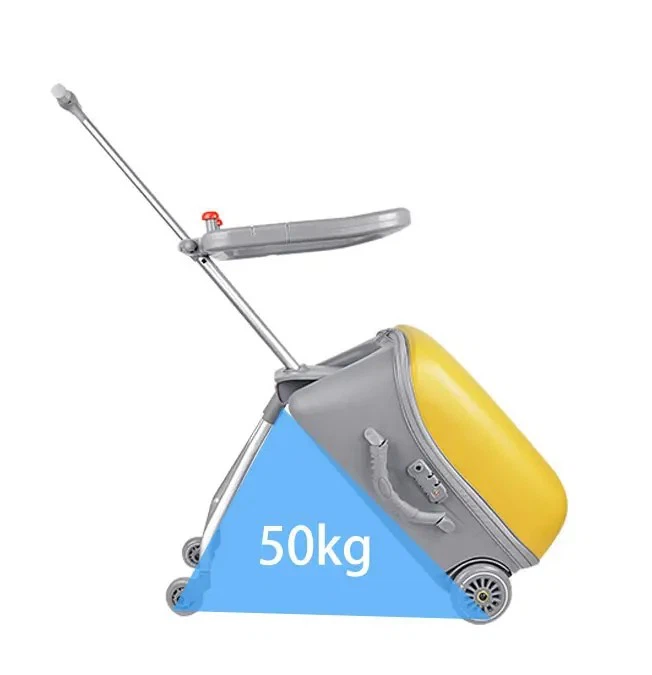
At our company, we offer a wide range of Kids Luggage options, including both spinner and non - spinner suitcases. Our Kids Luggage for Boys collection features stylish and functional designs that are perfect for young travelers. We also have a selection of Child Cabin Luggage that meets the size and weight requirements for airline travel.
If you are interested in purchasing children's suitcases for your store or for a group of travelers, we would be more than happy to discuss your needs. Our team of experts can provide you with detailed information about our products, pricing, and customization options. Contact us today to start a conversation about how we can meet your luggage needs.
References
- "The Ultimate Guide to Choosing the Right Luggage", Travel Magazine, 2023
- "Luggage Technology and Design Trends", Industry Report, 2023
- "Children's Travel Gear: What to Look For", Parenting Journal, 2023


